March 3, 2010 at 4:34 pm
· Filed under Bonsai, Care Information, Zen Living


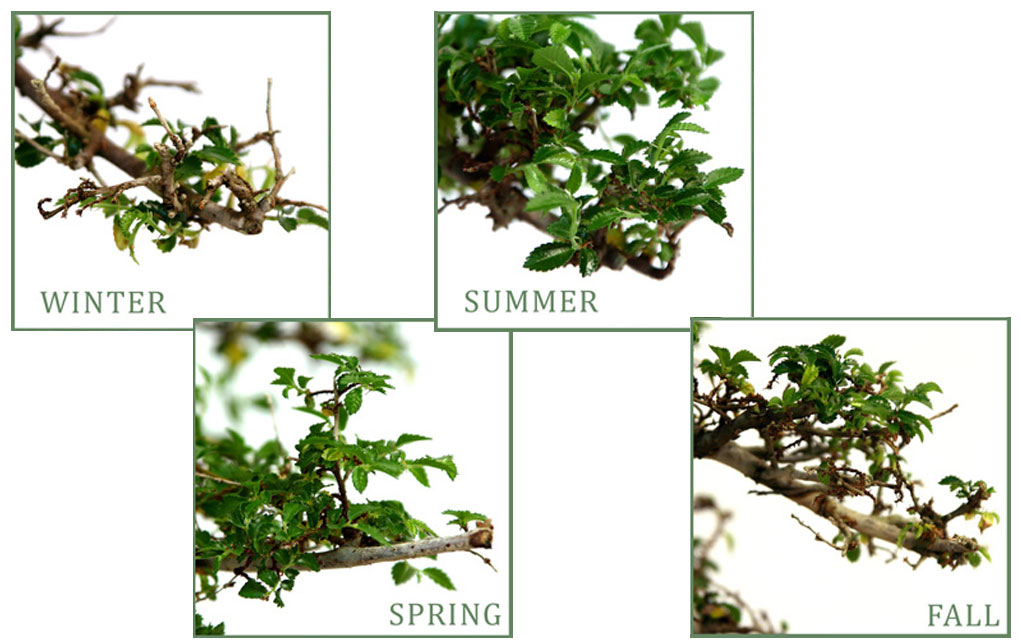
Autumn:
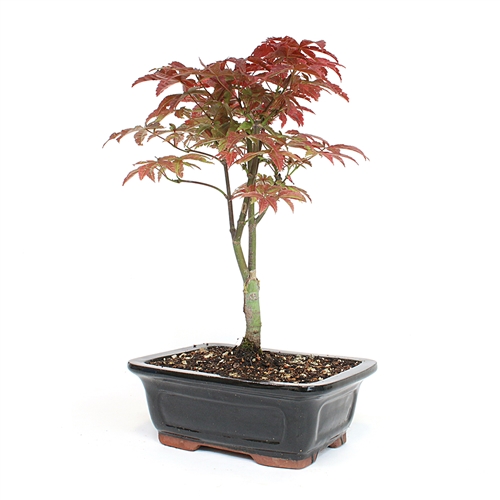
For the duration of autumn, red, brown and yellow leaves will begin to appear. These leaves will eventually fall off as the winter season comes closer.
Winter:
During winter, some people may think that the tree at this point is dead and may find its way into the garbage. Throughout winter, the leaves of the bonsai tree will fall off and result in an implication of bare branches, as it begins to make way for a new growth cycle of leaves in the summer. During this cold season, it is important to keep the tree in a warm area where the tree can receive an adequate amount of filtered sunlight for the longest period of the day. Fortunately, deciduous bonsai trees are extremely hardy and can sprout leaves quite easily if they are tricked into thinking it is spring. In order to “force” your deciduous bonsai trees, you will need to create a greenhouse atmosphere during the day to keep the tree extremely warm, above 85 degrees. This can be done with a glass dome or tabletop greenhouses. Using a humidity tray will also allow the water to evaporate and create a humid environment as well. At night, ensure that the tree does not get below 50 degrees. Keeping your tree in these conditions will eventually “force” the tree to sprout new buds. The buds will then full sprout after a few weeks and produce light green, soft leaves.
Spring:
During spring you will begin to see the formation of new buds on the bonsai tree. Beginning of early spring, you need to check if the winter season has caused any damaged on the tree. Check if the roots, twigs and branches are all in tact and have not rotted. After you have checked the condition of the tree and everything is in tact you want to see which bonsai trees need repotting. Deciduous trees should be repotted in the early spring, and evergreens can be repotted three or four weeks later. By late spring, you can begin pruning the deciduous trees. To prune the leaves of these trees we advise you to allow the branch to grow a few sets of leaves before pruning the leaves. To ensure proper growth of the branch you should cut diagonally. Spring is also a great time of year for spring cleaning and restocking of any care supplies you might need for your bonsai tree. If you are planning on attending any bonsai workshops, spring would be the best time.
Summer:
As summer approaches, bright green foliage will begin to arise. By this time, you will need to begin watering regularly as the intensity of the weather is increased. During the early summer watering once a day will be sufficient enough. As the temperatures during summer increases you can increase to two or three times a day depending on the type of tree. Summer also is a great time to prune and pinch the leaves of your trees.
Permalink
November 12, 2008 at 4:54 pm
· Filed under Bonsai, Care Information
During the winter, it’s easy for your bonsai to get too cold and hibernate. You’ll notice this when the leaves start turning yellow and falling off. However, not all bonsai will do this and there are sometimes ways to prevent this from happening at all.
Generally, the easiest way to keep your bonsai from “catching cold” is to water them during the daytime when the sun is out. This will ensure that the bonsai soil will not get too cold, and therefore bring the temperature of the entire tree down. However, please remember it is still very important to water your bonsai daily if the tree requires it. Otherwise, the tree may actually be dying and not hibernating. If your tree must hibernate because of the climate conditions, watering requirements will decrease sometimes to only once a week. Pay close attention to the soil conditions for best results.
For detailed information on how your bonsai is doing with respect to the temperature, we recommend a soil thermometer. It will indicate when your bonsai may be reaching the lower threshold. Assuming that it is, it may be time to either bring the bonsai into a greenhouse to keep them at their optimal temperature.
Individual bonsai species will vary as to how they react to the cold climate. For example, junipers enjoy living through the snow. Bonsai trees are very hardy. Even if the tree does decide to hibernate and the leaves do fall off, keeping them well watered and maintained will ensure that the leaves return fully in spring.
Permalink
July 25, 2008 at 12:26 pm
· Filed under Bonsai, Care Information, Lucky Bamboo, money tree
Bugs, for most of us they are to be squished upon contact, for some a scream and “get away from me!” reaction, and for the few as pets. But no matter how you look at it, we all have to live with them on this planet which we, and them, consider as home. Did you know that more than a million species have been classified while an estimated 20+ millions are unclassified? That potentially makes up over 80% of all various life forms on this planet!
For some of you out there, it is hard to believe that there are actually good bugs but following are some good samples. Lady bugs are welcomed by gardeners and are even sold at local gardening stores to help keep plants from being attacked by aphids since these are their favorite food. For the bad such as a bald-faced hornet which can leave you a painful sting, they help to rid of flies, yellow jackets, and can pollinate some plants. Even for the ugly such as the Assassin bug, they help to feed on mosquitoes, flies, and caterpillars.
So the next time you are picking up a newspaper or spray can to take out that bug, perhaps it would be better to reconsider what other types of pests it can possibly rid of for you and save yourself the trouble.
Permalink
June 11, 2008 at 3:11 pm
· Filed under Bonsai, Care Information
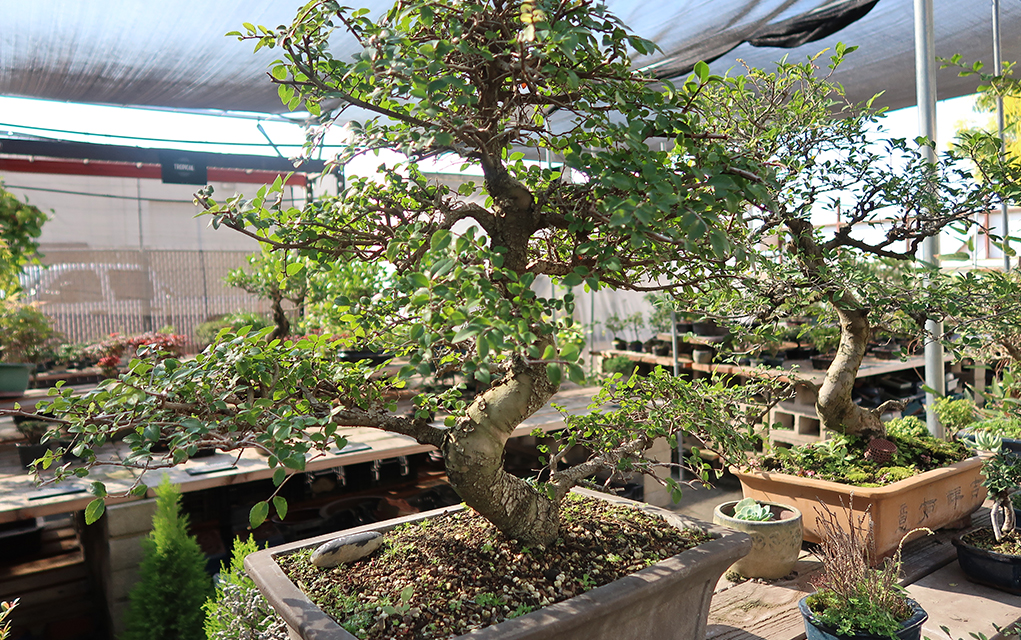
- The Chinese Elm bonsai tree enjoys partial filtered natural sunlight. Prolonged direct exposure to intense sun may burn the plant and yellow the leaves.
- The Chinese Elm bonsai tree constantly rotates leaves and sprouts new buds as old ones fall. This occurs most frequently when acclimating to new temperatures.
- Although the Chinese Elm bonsai tree is quite hardy, avoid cold weather. Prune after the growth period in early spring.
- Water daily, keeping the bonsai tree and soil moist at all times.
- You can repot in early spring, every 1-3 years, but plan to repot the bonsai tree either a month before or after pruning to ensure that the bonsai tree sustains the least shock possible.
Permalink
June 11, 2008 at 12:39 pm
· Filed under Bonsai, Care Information
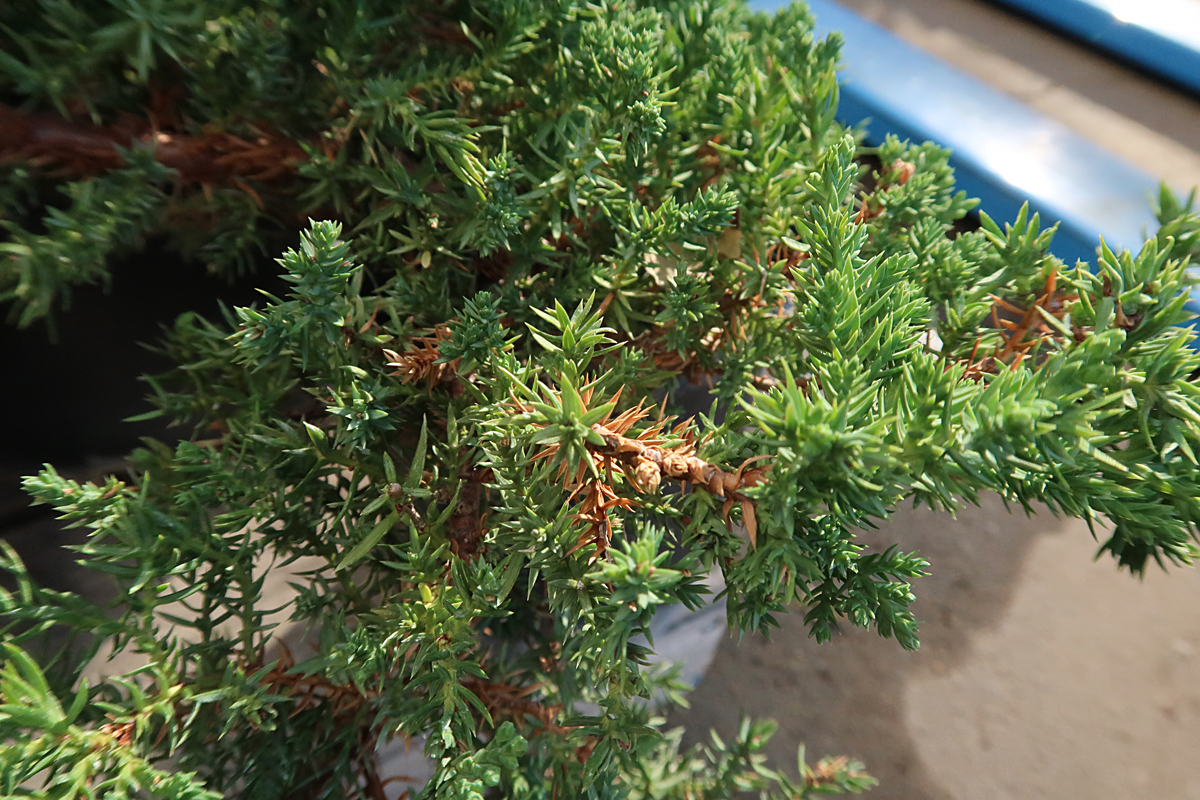
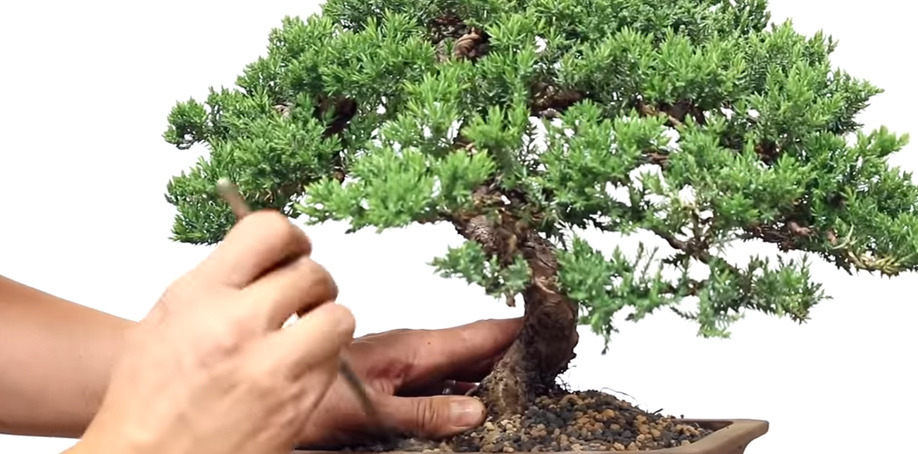
- The Juniper bonsai tree does best in filtered or shaded sunlight.
- Juniper bonsai trees can survive in cold weather and are extremely hardy but provide protection from freezing conditions in winter.
- To avoid browning of needles, prune by pinching off unwanted stems using fingers or shears. Foliage should be thinned to let in light.
- Water moderately, keeping the bonsai tree moist at all times.
- Fertilize your juniper bonsai tree once every two weeks. We recommend using a bonsai fertilizer.
- Juniper bonsai trees may be repotted throughout most of the year, although, the best times for repotting are in the spring and fall. After repotting, water thoroughly and keep the bonsai tree in a shady location for several weeks so that new roots may grow.
Permalink
May 12, 2008 at 3:00 pm
· Filed under Bonsai, Care Information
- Ficus will grow decently in low light, but thrive in high light conditions.
- Prune back to 2-4 leaves after 6-10 leaves have grown. We recommend using a dull pruning tool on Ficus, as a clean cut made by a sharp tool tends to bleed more than a dull cut.
- Water moderately, increasing in summer and decreasing in winter. Many Ficus are very tolerant of being over or under watered, which makes them ideal for beginners. The Ficus also enjoys a daily misting to maintain humidity.
- Repot every 2-3 years, although some will grow rapidly enough that yearly repotting may be necessary. The best time is before a new growth spurt, especially in spring, but Ficus can literally be repotted any time of year if reasonable after-care is given. Roots can easily be pruned by half. Basic bonsai soil is recommended, although Ficus tolerates many soil conditions.

Permalink
May 10, 2008 at 3:26 pm
· Filed under Bonsai, Care Information
- The Schefflera does best in filtered or shaded sunlight. Avoid direct sunlight.
- Prune by pinching off unwanted stems using fingers or shears.
- Water moderately, do not let the soil dry out. Water whenever the soil looks dry. Over-watering will result in trunk rot.
- Fertilize your bonsai once every two weeks. We recommend using a bonsai fertilizer.
- Leaves can be cleaned with damp cloth to avoid parasites.
- Since the Schefflera is a tropical plant, it does best when paired with a humidity tray.

Permalink
April 16, 2008 at 3:18 pm
· Filed under Bonsai, Care Information
- The Ponytail Palm does best in filtered or shaded sunlight but can also tolerate direct sun.
- Leaves can be pruned back regularly as the leaves grow rather quickly.
- The Ponytail Palm does not require frequent watering. Once a week is sufficient.

Permalink
April 8, 2008 at 3:02 pm
· Filed under Bonsai, Care Information
- Palm does best in filtered or shaded sunlight but can also tolerate direct sun.
- The palm can survive in cold weather as well as hot weather. It is extremely hardy.
- Pruning is not necessary as the leaves will grow very slowly.
- Sago Palm does not require frequent watering. Weekly watering will be sufficient but avoid watering directly on top of the crown bulb, just around the sides.
- The Sago Palm does not require much fertilizing but fertilizer can still be used.
- Does not require repotting unless the bonsai exceeds the size of the pot.

Permalink
April 7, 2008 at 4:14 pm
· Filed under Bonsai, Care Information
- Fujian Tea thrive in sunny, warm temperate locations. Better lighting conditions will result in more frequent flowering. Avoid intense afternoon sun shining through windows in the summer.
- Fujian Tea bonsai should be kept indoors during the winter months. They should be maintained at winter temperatures above 60 degrees Fahrenheit.
- Fertilize your Fujian Tea bonsai once every two weeks. We recommend using a bonsai fertilizer.
- To water your bonsai, soak it in a sink or container of water up to the trunk for about 5 to 10 minutes. Then allow it to drain. If top watering your bonsai, water, wait a few minutes, and water again. Repeat this several times to insure that your bonsai has received a thorough watering.
- Pruning - The clip-and-grow method is very successful with this species.
- Fujian Tea should be repotted about every two years. The best times for repotting are in early spring. After repotting, water thoroughly and keep the plant in a shady location for several weeks so that new roots may grow.

Permalink